I think the first song I’d ever heard by The Cribs was ‘You’re Gonna Lose Us‘. The video showed up on MTV2 a few times some time in 2005/06 (I don’t know just a guess) and I reckoned it was an all right one. First thing I noticed about the band was that their two singers (bassist Gary Jarman and guitarist Ryan Jarman) looked very much alike. For obvious reasons too. They are identical twins. Further research showed that the drummer (Ross Jarman) was their younger brother. So that was cool…. A literal band of brothers. So the video had a bit of circulation and then it died down. Didn’t hear from The Cribs on TV for quite some time.
That was until 2007. That was the band’s big year. They came back with ‘Men’s Needs‘ which was repeated endlessly and to a point where I couldn’t really stand it anymore. Unfortunately, that feeling still lasts to this very day. A lot of people love it though so who am I to say anything.
So to the actual song that today’s post is based on. ‘I’m a Realist’ is the fifth song on The Cribs’ third album Men’s Need’s, Women’s Needs, Whatever, produced by Franz Ferdinand frontman Alex Kapranos and released in 2007. The track was released as the album’s last single in early 2008. To be honest, I’ve never thought too deep into what this song is about. Listening loosely I will say it is a self-deprecating take on dating and relationships. Gary and Ryan’s vocals are on point, with each brother alternate lines before singing in unison for the chorus. Strong harmonies abound throughout. It’s pretty much their trademark. They pull it off very well. The guitar riffs are really catchy too. Helps that they almost match the vocal melodies for the majority of the track.
How NME/UK indie 2007 is that music video as well? Could never be pulled off today. Those were good times.
So on the day that couples are loving it up, surely to go on a date somewhere or other to look in each other’s eyes and display how much they care with an act of affection, the song that follows the last post is The Beatles’ “I’m a Loser”. Mainly written by John Lennon, the track is about the end of a relationship and maintaining a happy appearance whilst feeling like you’re dying inside. This one is for the lonely people. The irony hasn’t been lost here.
Appearing as the second number on Beatles for Sale, an album where the band started incorporating more introspective elements into their repertoire, “I’m a Loser” is just one of the tracks that were to be influenced by Lennon’s meeting with Bob Dylan in the summer of 1964. The track is carried by its prominent acoustic rhythm and folk elements that The Beatles were to further develop down the line.
Recovering from the emotional exhaustion caused by bandmate Kurt Cobain’s death in 1994, Dave Grohl decided to go into the studio and record some songs that he had written and kept on the down low whilst still performing with Nirvana. It took him about a week to do so in October of the same year, recording all the instrumental parts himself (bar one guitar track) and singing every word from the heart.
The debut album by Foo Fighters has always been my favourite of the band’s….. it’s the most raw and possibly impulsive that Dave Grohl has been in the entirety of the group’s active years. He’s admitted that a lot of the lyrics don’t make sense, and his vocals are double-tracked and lathered with effects in some places because he was insecure about his vocal abilities. But that all adds to its charm.
‘I’ll Stick Around’ was the second single released from the album but was the first Foo Fighters track to get the music video treatment (as can be seen above), allowing everyone to see the drummer from Nirvana’s new band. In it, he, Pat Smear (guitar), Nate Mendel (bass) and William Goldsmith (drums) are confronted by a massive 3D HIV virus. The track itself is meant to be a ferocious scathing attack on Cobain’s widow Courtney Love, who Grohl hadn’t felt the greatest of ‘love’ for up to that point. In fact the HIV virus in the video was initially conceived to be a ‘bloated, charred, inflated girl representing Courtney’ before management got in the way.
The track is a powerful one. From its pummeling opening drum roll, it hardly lets up. Even in the “calmer” verses, there’s a sinister tone to the surrounding guitar and menacing groove before it all builds up into the raucous refrains. I can barely make out what Grohl is singing in those verses, though the message of the track is really summed up in its two most clear lines: “I don’t owe you anything” and “I’ll stick around, and learn that all that came from it”. The latter arriving in the song’s cathartic last minute and repeated to oblivion before it comes to a dramatic close. It’s a great tune.
So it goes that ‘I’ll Follow the Sun’, the fifth track on the Beatles’ second album of 1964 Beatles for Sale, had been one that Paul McCartney had saved up since he was sixteen up to that point. That album was created during a time when the group were constantly touring and barely had any free time to themselves; when they did have that time, it would be used for working and going into the studio and recording more songs. McCartney and Lennon didn’t have as much time to write original material together too, so the former pulled this particular track out to get things moving forward.
‘I’ll Follow the Sun’ sees McCartney writing about the end of one relationship and looking on to the next one with a sense of optimism and wonder, whilst the lady who is left behind doesn’t know what she’s lost until it really hits. It’s a good tune with a great melody as is typical in a lot of McCartney songs. Very mellow with subtle knee-slapping percussion from Ringo Starr and a rhythm guitar in the right channel that has such a smooth tone to it, either played by Harrison or McCartney. In comparison to the ‘shake-it-up-baby-now’ good time music of their previous albums, ‘I’ll Follow the Sun’ – and Beatles for Sale as a whole – signified a change in musical style that would only continue to evolve as the group continued to work together.
Here’s Paul playing the song live with his band in 2005, ’cause why not.
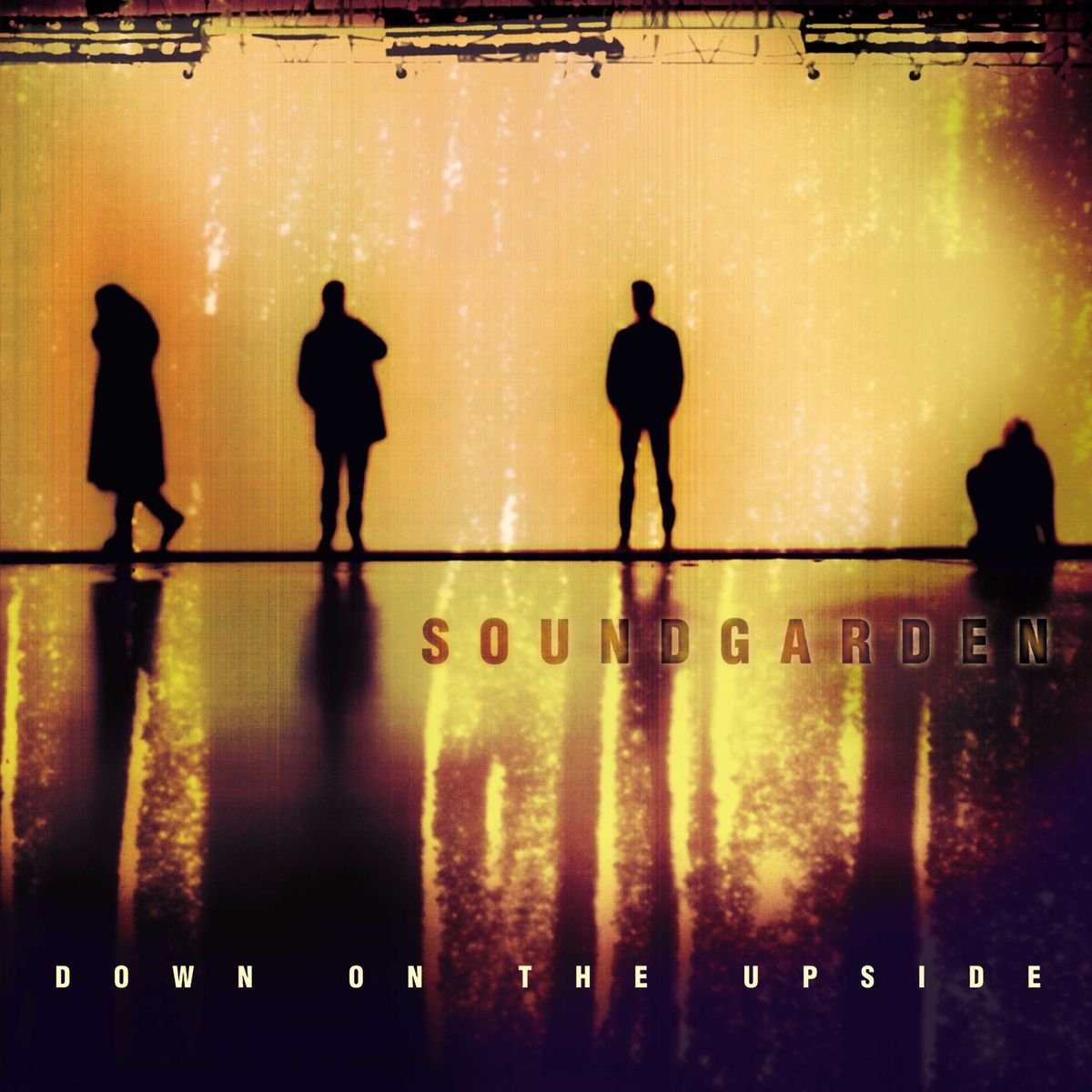
This is a thing I haven’t done in a long time. I last did this in 2014 for Cloud Nothing’s then newly released album Here and Nowhere Else. You can read that. I did another for Mac DeMarco’s Salad Days too. I was planning to do this for another album earlier this year, though for whatever reason just didn’t get to it. For the past few weeks though, the album that’s been on my mind is Soundgarden’s 1996 effort Down on the Upside.
The album’s been in my music library for quite some time now, but it’s only very recently that I listened to the whole thing again and realised just how brilliant it is. It was maybe around 2015 that I watched the video for ‘Pretty Noose’ one day – for what reason I can’t really remember now – and the track immediately became one that I would sing in the shower or hum out loud during idle moments. That song is the first on Down on the Upside, starting the proceedings off with its slimy riff from Kim Thayil and setting the tone for the rest of what’s to follow.
I downloaded the album soon after. I listened to it through all 16 tracks though nothing really stuck. Some months after ‘Rhinosaur‘ suddenly jumped out at me. That’s the second track on the album. With its music written by drummer Matt Cameron, ‘Rhinosaur’ features these ascending and descending riffs and licks that culminate into a stampede of a breakdown two thirds of the way through. It’s a really groovy track, almost funky in some ways, but a thrilling one overall. Takes you in different directions before throwing you all over the room. That was an instant add to the phone too.
And it stayed that way for a while. ‘Pretty Noose’ and ‘Rhinosaur’ were the golden two. I never paid much attention to the other fourteen songs that the album offered. Chris Cornell died in May last year and the first thing to do, like many others, was listen to the man’s music. Down on the Upside was still there in my library so why not listen to it once more? Surely there would be another track that I had been missing out on for all that time. There were riffs here and that were definitely pleasing… though that was it. I could recognise that there was something good about it all though it never really stuck.
That has all changed. I’m actually convinced that the album may be Soundgarden’s greatest. Now I know that the consensus is that Superunknownis the band’s opus, though there are some tracks on there that I can’t vibe to that well. Down on the Upside however provides almost every side of Soundgarden – the heavy side, the lighter side, the surreal side, the realist aspect. They are all combined to provide Soundgarden at their essence, which is probably what made it so suitable as their final album for all those years.
What was always so great about Soundgarden was that all four band members brought something to the table. It wasn’t a function where the lead singer held everyone to his beck and call; if any member has a piece of music or a lyric that could be worked on, the four of them would work together to create great compositions.
Matt Cameron who as aforementioned wrote the music for ‘Rhinosaur’ did the same for the ninth track ‘Applebite’, a stirring almost psychedelic song that becomes more intense as time goes on, aided by Cornell’s heavily masked ghostly vocals. Kim Thayil had less songwriting credits here than on previous albums, though the one track he completely wrote (‘Never the Machine Forever’) is a monstrous behemoth, complete with cinematic guitar riffs in odd time signatures and another captivating vocal performance from Cornell. Ben Shepherd, the band’s bassist, worked on six out of the 16 tracks on the album and it’s those songs (‘Zero Chance’, ‘Dusty’, ‘Ty Cobb’, ‘Never Named’, ‘Switch Opens’, ‘An Unkind’) that are highlights for me. Particularly ‘Switch Opens’ which, with lyrics written by Cornell, seems to signify a time of change, rising up and taking action.
The album is not as heavy as Superunknown. When I listen to each track I’m heavily reminded of the desert and sand, there’s just something about the music that gives me that imagery. It’s not just because those two things are mentioned in ‘Burden in My Hand’ either. There are some songs which make me feel like I’m in the same blacked out/spark lit room that the four members are in on the album cover. It’s a lot more acoustic but still grimey in its delivery. Much more groovier and less thrashy. Technically complex in terms of guitar tunings and time signatures but very melodically accessible. Every song has it for you.
I don’t want to say it in risk of possibly offending, but there’s something almost country about some parts of the album. I can already sense the ‘what’ reactions coming from anyone reading this. I know. I’m not referring to country music like…. Florida Georgia Line or…. Billy Ray Cyrus or something. (Those are my best examples). But surely you could listen to ‘Dusty’and its main riff that chugs along during the verses, or that little lick that occurs in ‘Zero Chance’….. even ‘Blow Up the Outside World’ in some ways, and consider that there’s something there? It’s my interpretation anyway. Though I think it’s the lighter direction the band seemed to be heading in that built some creative differences between bandmembers and resulted in their initial split in 1997.
It’s a real shame that Chris Cornell died. Soundgarden were in the middle of a tour when he did, and there was talk that they were working on a new album at the time. As for now Soundgarden are still a band albeit not doing anything at the moment understandably. I do hope that when it comes to 2021 that Cameron, Thayil, and Shepherd could get together to work on a 25th anniversary remaster of Down on the Upside. It definitely deserves one.